6PD-Q Classes and Related Targets
Scientific detection needs for tyre source pollutants, transformation products and other specific organic targets, matching analytical routes by target and sample matrix.
Design pre-treatment, instrument conditions, quantitative route and quality control programmes based on sample matrix, target, concentration range and research purposes for scientific detection needs that are not suitable for direct application of existing standard methods. Regular alternative directions can be directly added to the list of needs, with special projects re-engineered for methodological development and technical assessment.
Here's the typical demand portal.. Targets, sample quantities, detection needs, pre-treatment and instrument conditions to be identified on a project-by-project basis.
Scientific detection needs for tyre source pollutants, transformation products and other specific organic targets, matching analytical routes by target and sample matrix.
Analysis of heavy metals and elemental content in water, soil, sediment, materials and other samples, and identification of element ranges and digestion options for research purposes.
Project matching around soil carbon-related indicators, scientific testing needs for different carbon pools or components, combined with experimental design organizational results.
Support pre-processing, instrument conditions, calibration, quality control and data delivery programme customization for special matrices, new targets or non-standard scientific issues.
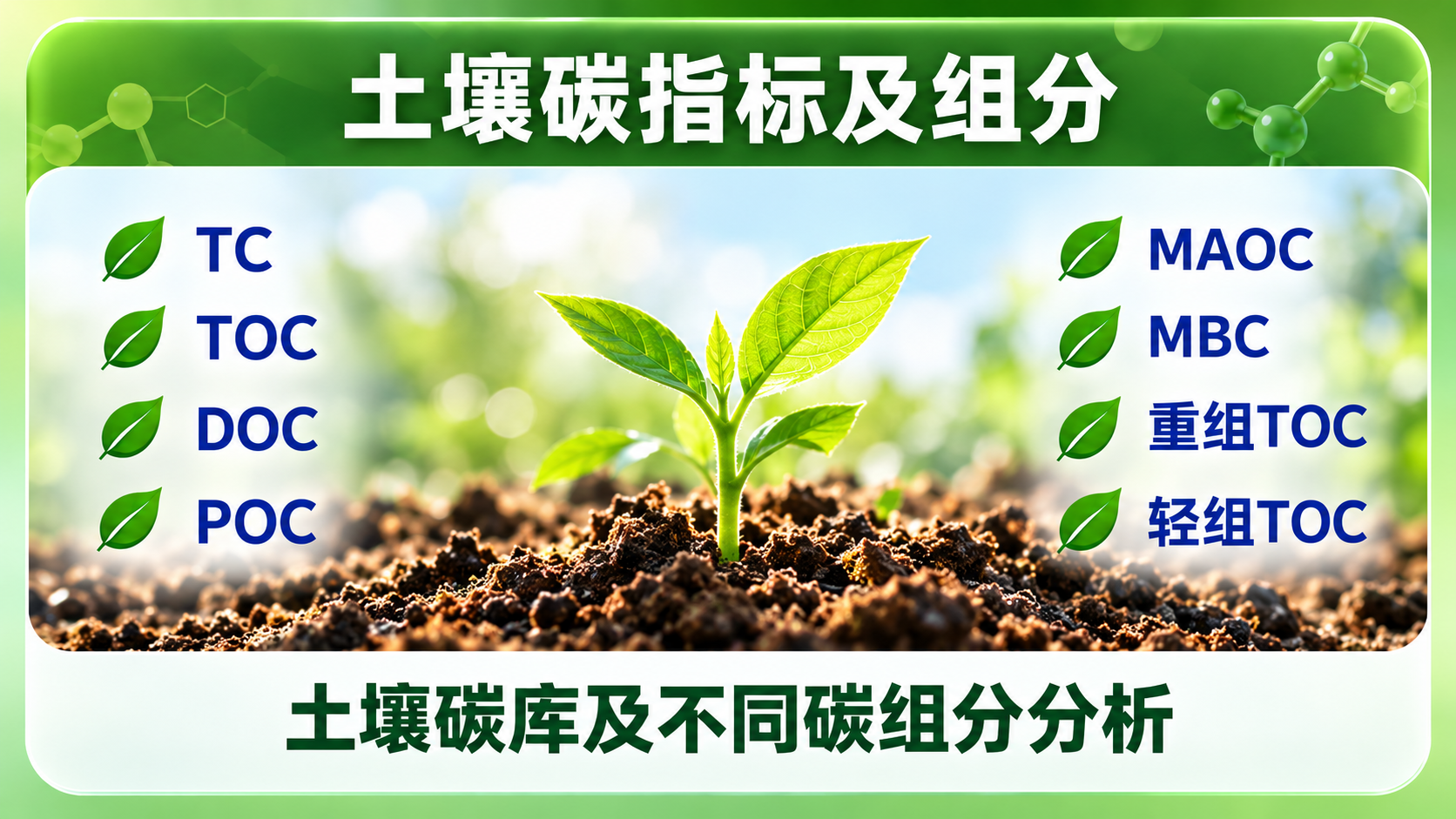
Set test combinations and pre-treatment options around indicators such as TC, TOC, DOC, POC, MAOC, MBC, restructuring TOC, light group TOC, according to soil type, research purpose and sample conditions. This direction is a typical example of a “detection methodology development” plate, without limiting other customized testing items.
When an off-the-shelf project is unable to directly cover research issues, methodological feasibility and sample matrix assessment are undertaken before formal testing options are established.
For example, emerging transformation products, complex environmental samples, special organisms or material matrices that require recertification for extraction, purification, separation and detection conditions.
When the project involves multiple processing groups, time series, standard curves, recovery rates, gaps and quality control, complete data links can be designed according to paper or subject needs.
From the clarification of needs, the feasibility will be judged before the methodological conditions, quality control and formal sample analysis.
Target object, sample type, sample volume, expected concentration and research purpose.
Identification of pre-treatment, analysis of platforms, jamming factors and feasibility.
Optimizing extraction, purification, separation, testing and quantification conditions.
Set blanks, standard curves, markup or duplicate measurements according to project needs.
Sample analysis completed and results, graphs and descriptions organized for scientific purposes.
Testing programme, methodology development, technical route and data analysis advice, please add technological micro-credit.
 Suggested note: Web topic + unit + target/direction of research
Samples, testing projects, delivery, quotations, contracts and progress requirements, add sign(s) & test enterprise tweets.
 Recommendation preparation: Sample type Quantity Target/indicator Quantity Quantity Quantity Quantity Quantity Target / Indicator Qualitative cycle