Multi-assembly testing
Around CH₄, CO₂, N₂O The three core greenhouse gases establish corresponding detection pathways.
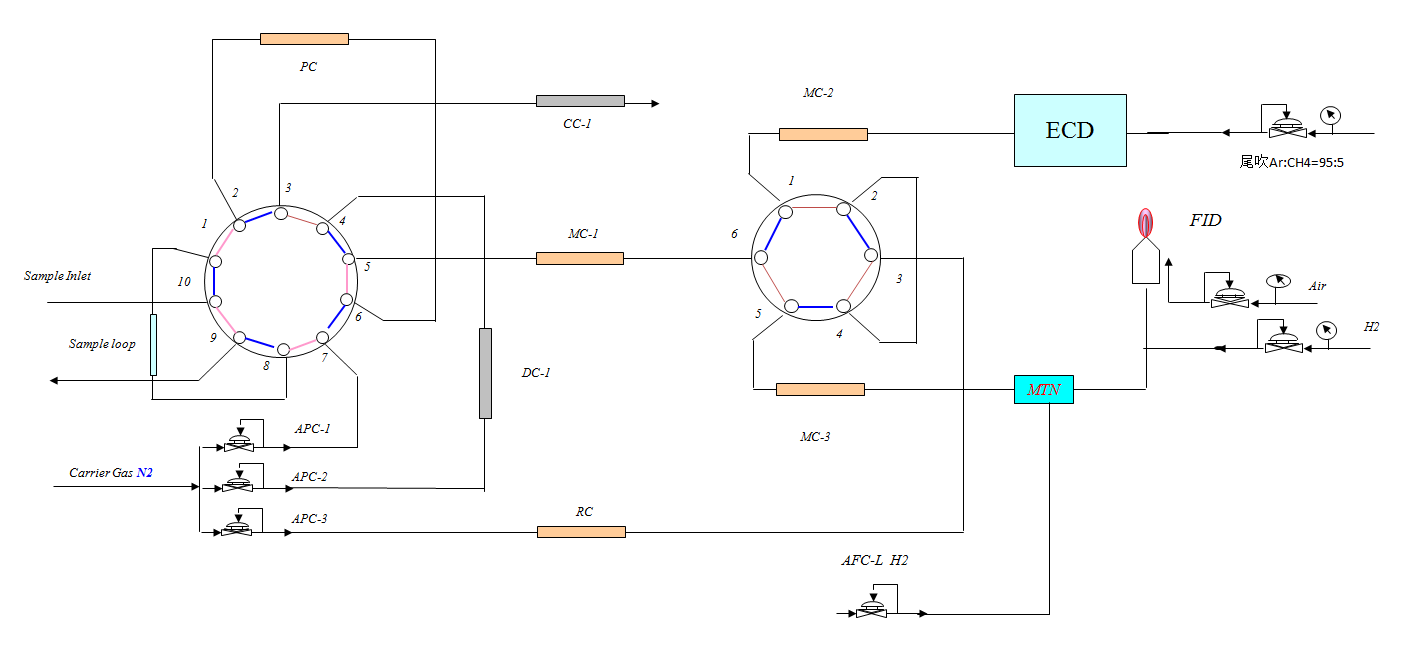
Soil-oriented — Plant — Water — Scientific scenes such as biological processes, Based on a dedicated gas chromatography system CH₄, CO₂ and N₂O Multi-assembly sub-test path. Switch through auto-valves, Specialized chromatography column, FID / ECD Two-detection channels and methane conversion units, Complete research links from sample sampling to quantitative analysis.
The thematic positioning is not a single gas chromatography test project, but is structured around greenhouse gas composition, sampling design, chromatography, quantitative calibration and scientific interpretation of organizational detection capabilities.
Around CH₄, CO₂, N₂O The three core greenhouse gases establish corresponding detection pathways.
Quantification and diversion analysis of samples using automatic six-barrel, ten-barrel, quantitative ring and dedicated column tracks.
FID and ECD Carry out response tests for different gases, CO₂ Get in after methane conversion FID Path.
Qualitative, quantitative and batch data collation in conjunction with standard gas, workstation and chromatographic peak information.
The following test paths are based on the specific GHG profiles and typical spectrographs provided, with specific methodological parameters and ranges to be identified based on sample concentrations and research needs.
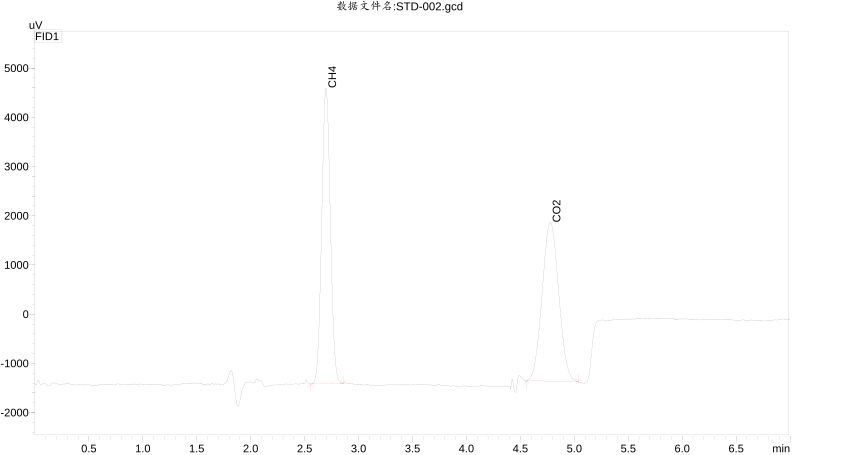
Using FID Hydrogen Flammation Ionization Detection Channels, applicable to methane component analysis in GHG studies.
Through the methane transformation furnace, CO₂ Convert to enter after FID Channels, Achieved and CH₄ Auxiliary Analysis Path.
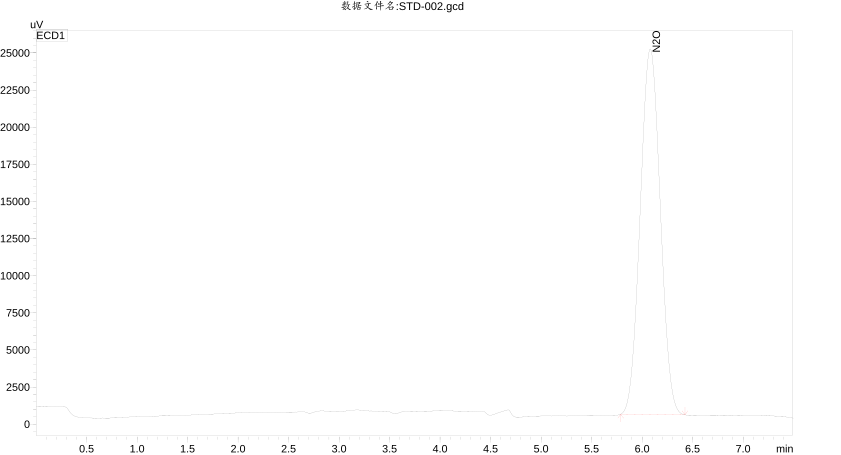
Adopt ECD Electronic capture detector, Achieved N₂O Specialized response and chromatography analysis.
GC –2010Pro and GC – 2014CA configurations with automatic pressure control, double detector, methane conversion unit, automatic valve box and dedicated column group.
GC‑2010Pro Host + ECD‑2010 + FID‑2010 + MTN + Autovalve Box + Specialized columns.
GC‑2014CA Host + ECD‑2014CA + FID‑2014CA + MTN + Autovalve Box + Specialized columns.
It's in the source FID Channels CH₄ / CO₂ and ECD Channels N₂O Typical chromatography, You can see the target gas's stand-alone response peak.
Science-based testing of GHG production, releases and changes in different environments and biological processes is possible, and actual sampling programmes need to be designed in conjunction with study scales and concentration ranges.
Agricultural soils, Fertilizer treatment, In the case of culture experiments, CH₄ / CO₂ / N₂O Change studies.
Study on gas releases and carbon nitrogen cycles associated with wetlands, sediments, plant roots and ecological processes.
Sewage treatment, anaerobic/poerobic processes, fermentation systems and reactor gas phase separation studies.
Change in concentrations and evaluation of effects of gases in adsorption, catalytic, transformation and GHG emission reduction materials.
Pre-confirmation of sampling methods, concentration ranges, sample numbers and time points is more important for scientific projects than simply “sampling tests”.
Subject, target gas, number of samples, time point and range of expected concentrations.
Identification of methods of gas collection and preservation to avoid leakage, adsorption or cross-pollution effects.
Determination of calibration and analysis options in conjunction with standard gas and target concentration ranges.
Automatic valve input, chromatography separation, FID / ED channel detection and peak points.
Data required to organize target group results, chromatography, batch information and scientific analysis.
If you're working on it, CH₄, CO₂, N₂O Related emissions, Fluxes, Emission reduction or institutional studies, Research systems and sample information can be provided first, We'll match the detection and data program.
AI, Calculating Simulation, Testing Programs and Technical Routes Advice, please add technological micro-credit.
 Suggested remarks when added: Web topic + unit + research direction
Samples, detection projects, delivery, quotations, contracts and progress requirements, please add a sign/screw enterprise microletter.
 Recommendation preparation: Sample type Quantity Target/indicator Quantity Quantity Quantity Quantity Quantity Target / Indicator Qualitative cycle