Pre-sampling
Dismantling, separation, filtration and particulate enrichment of environmental matrices such as water samples and soil.
Research on environmental microplastics, providing scientific testing support for pre-sampling, particle screening, micromorphological observations, particle size and fibre characterization records, FTIR spectroscopy collection and spectroscopy matching. Information is available that highlights the results of soil and water samples and can be extended to complex biological sample studies.
From pre-sampling to micro-screening and spectral recognition, microplastic detection links for environmental samples are established.
Dismantling, separation, filtration and particulate enrichment of environmental matrices such as water samples and soil.
Record the morphological characteristics of particles, fragments, film and fibres, and conduct a dimension assessment at a scale.
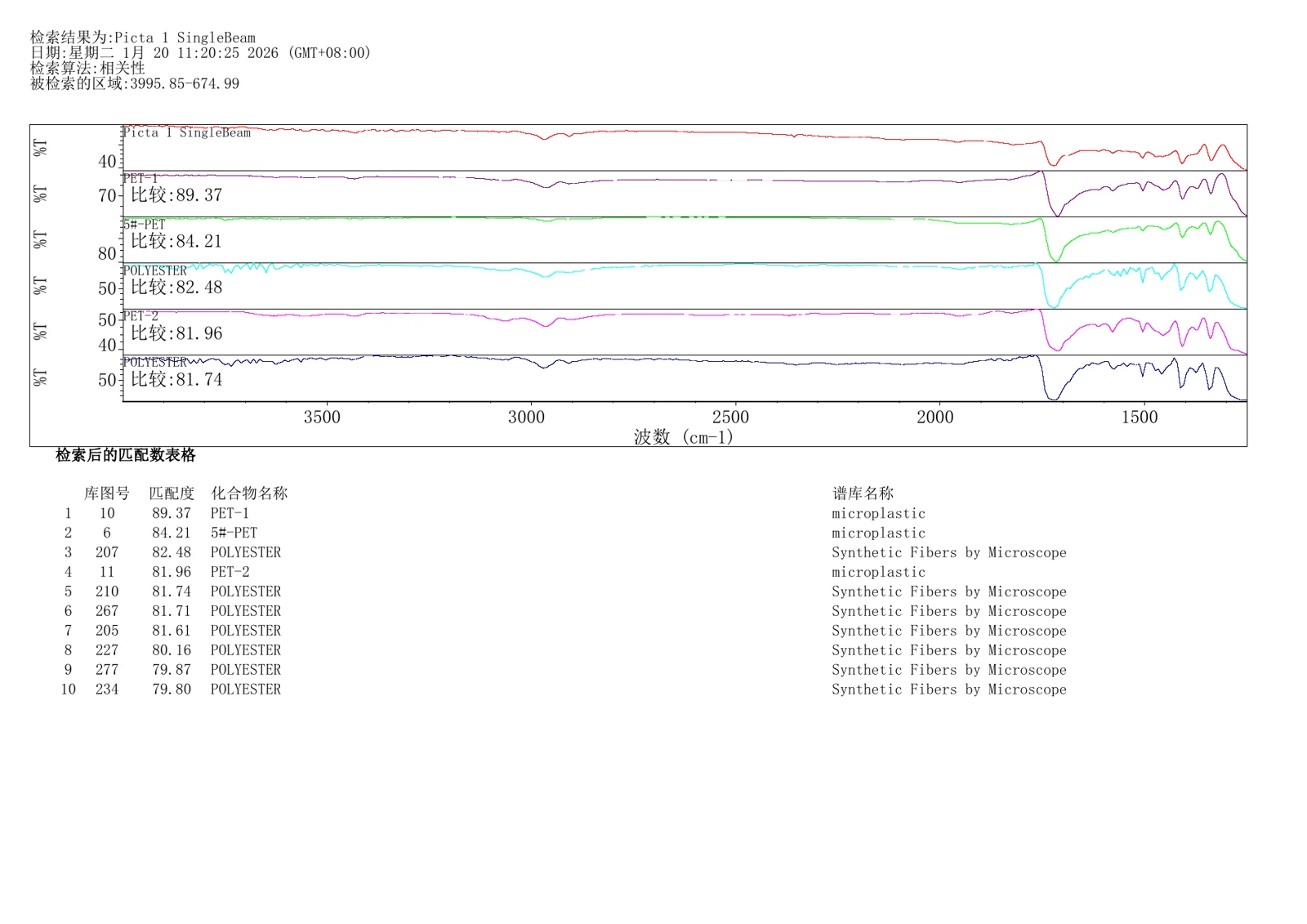
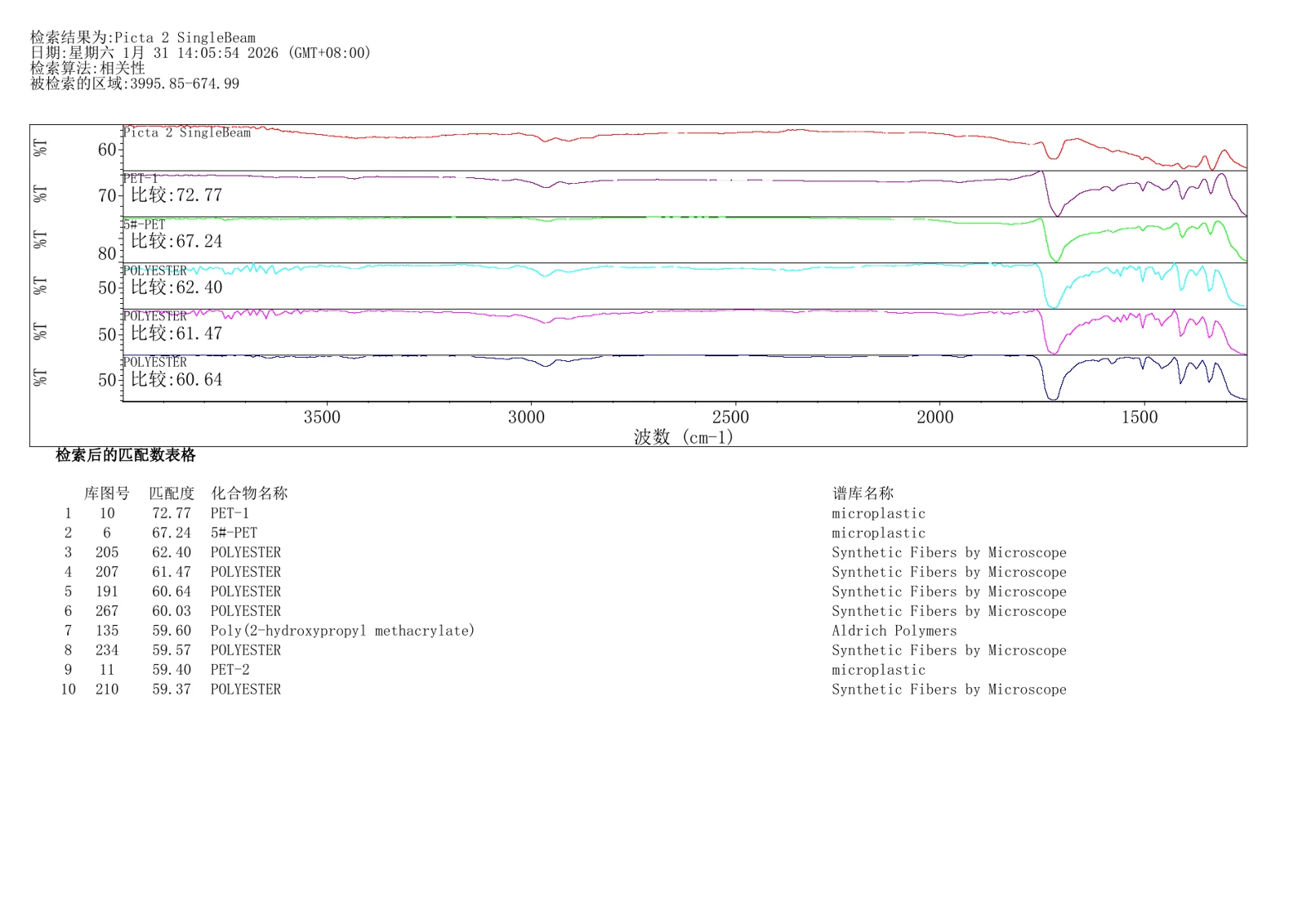
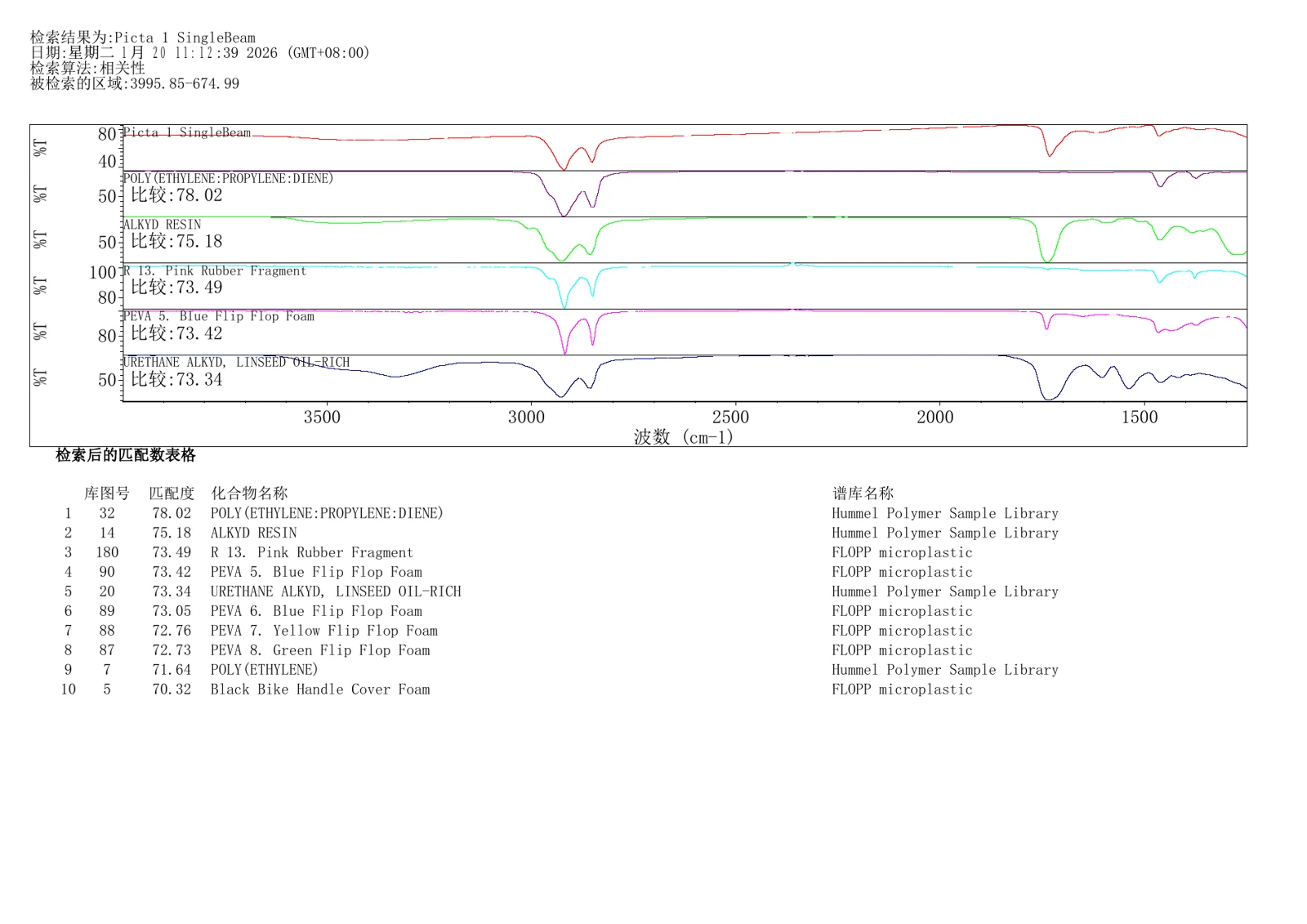
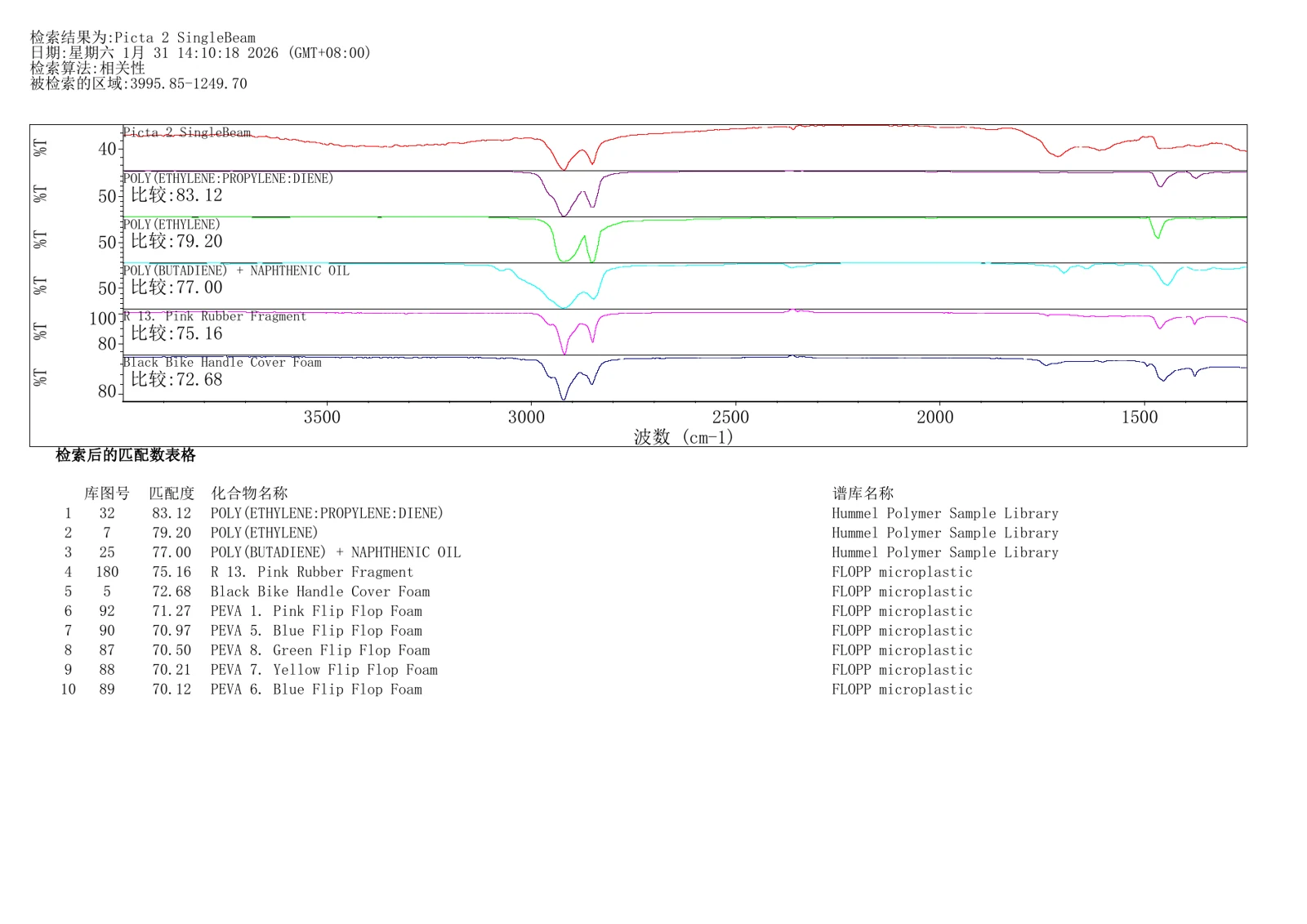
Collect target particle spectra and match the polymer spectrometer to assist in identifying material types.
Generate representative images, spectra matching results and comparisons between samples to provide a data base for subsequent exposure and source studies.
The following module will be used to demonstrate available environmental sample testing information; Biological samples are not displayed here as validated data.
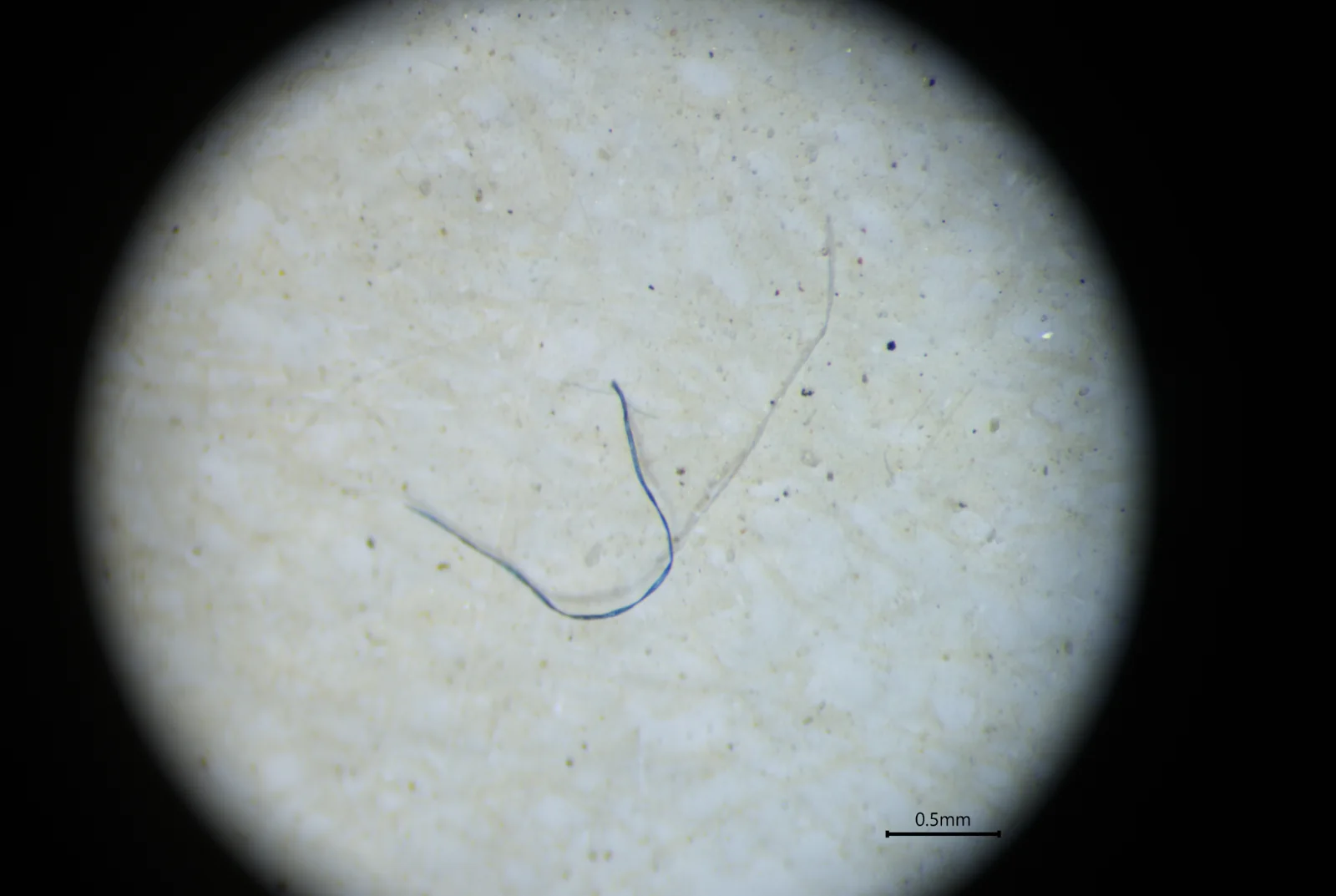
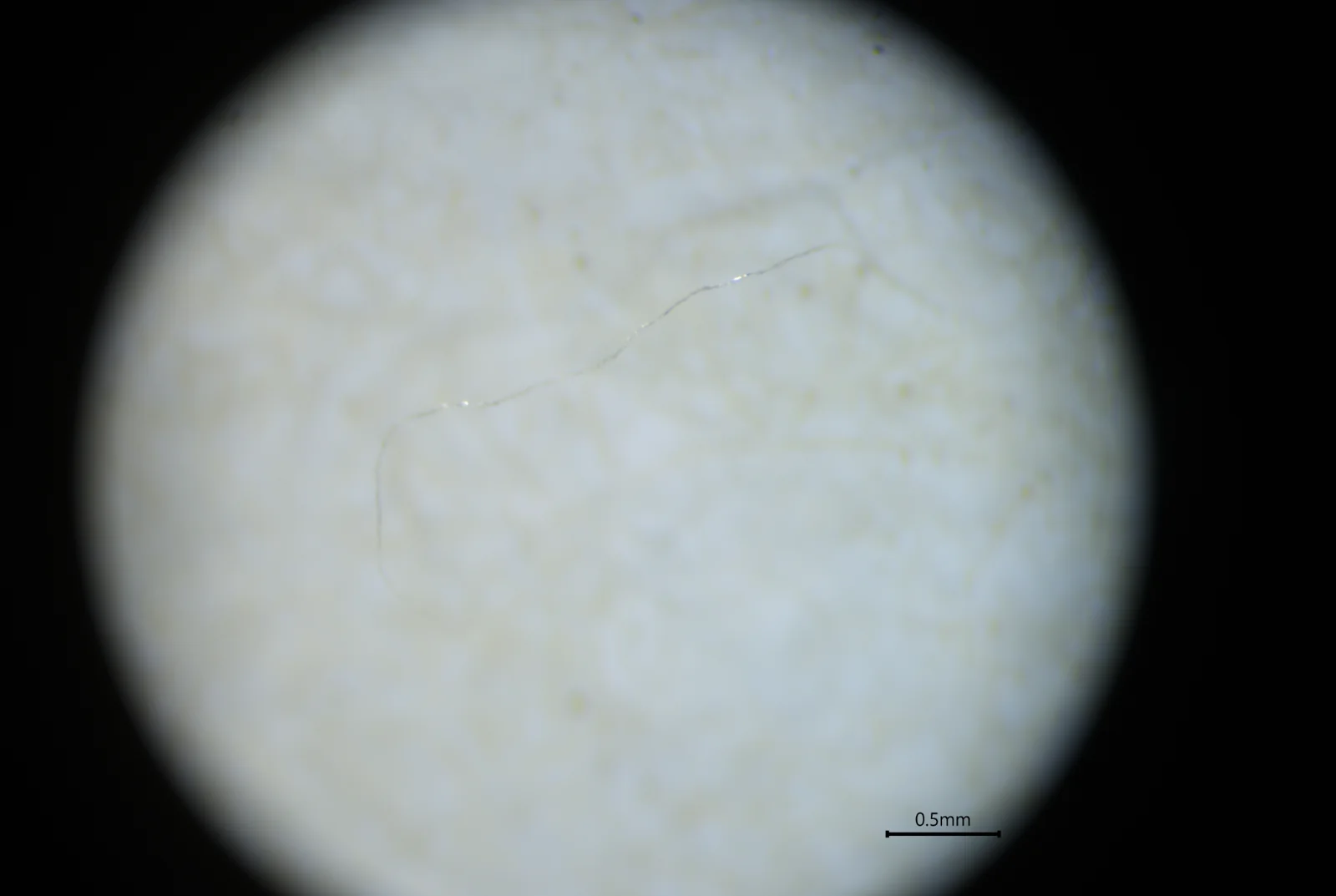
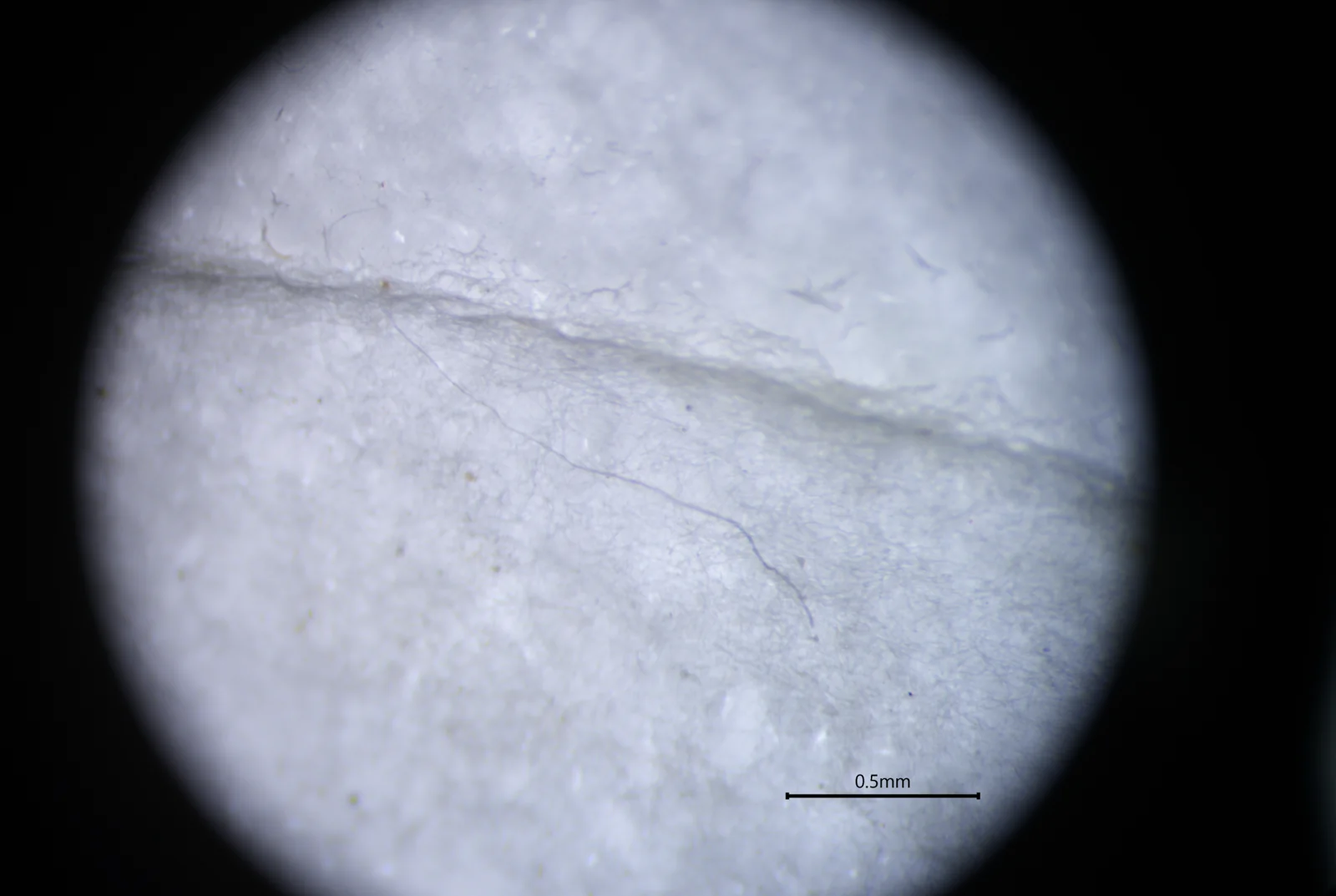
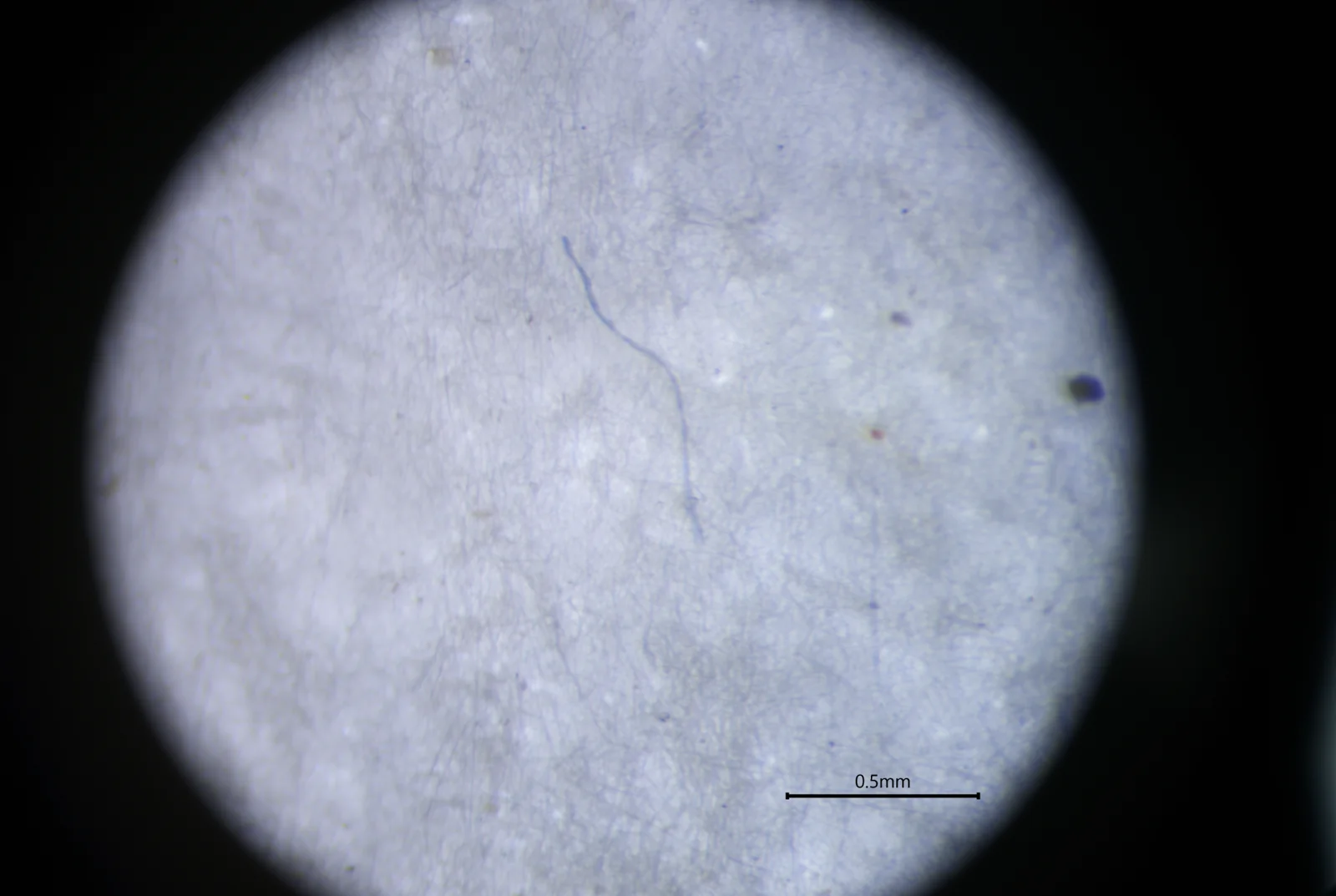
High-match results for polymers such as PET / Polyester can be found in the available information, along with prolyethylene and rubber/flexible candidates for supporting material determination and further review..
The following is an expansive application for microplastic exposure and biodistribution studies:; Not as an existing measured data expression on the current page.
Microplastic exposure studies for the circulatory system, with enrichment and background control processes based on sample size and target particle size.
Application to excretion pathways and post-exposure transport studies, with a focus on low abundance particle recovery and gap control.
Applicable to tissue microplastic distribution studies, need to be identified in conjunction with tissue digestion, filtration enrichment and subsequent spectral confirmation.
For ingestion exposure and excretion studies, optimize digestion, density separation and particle screening based on complex organic matrices.
Actual programme adjusted to sample type, target particle size, particle abundance and research problems.
Identification of water samples, soil or biological sample types, sample sizes and research targets.
Dismantling, filtering, density separation or other adaptation process.
Position particles and record colour, shape, size and fibrous characteristics.
FTIR e.g. spectroscopy collection and spectroscopy search, which supports the identification of polymer types.
Output representational maps, spectra matching, classified information and description of scientific data.
Advice on testing programmes, technical routes and data analysis. Please add technological micro-letters.
 Suggested remarks when added: Web topic + unit + research direction
Samples, detection projects, delivery, quotations, contracts and progress requirements, please add a sign/screw enterprise microletter.
 Suggested preparation: Sample type Quantity Target particle/material Quantity