
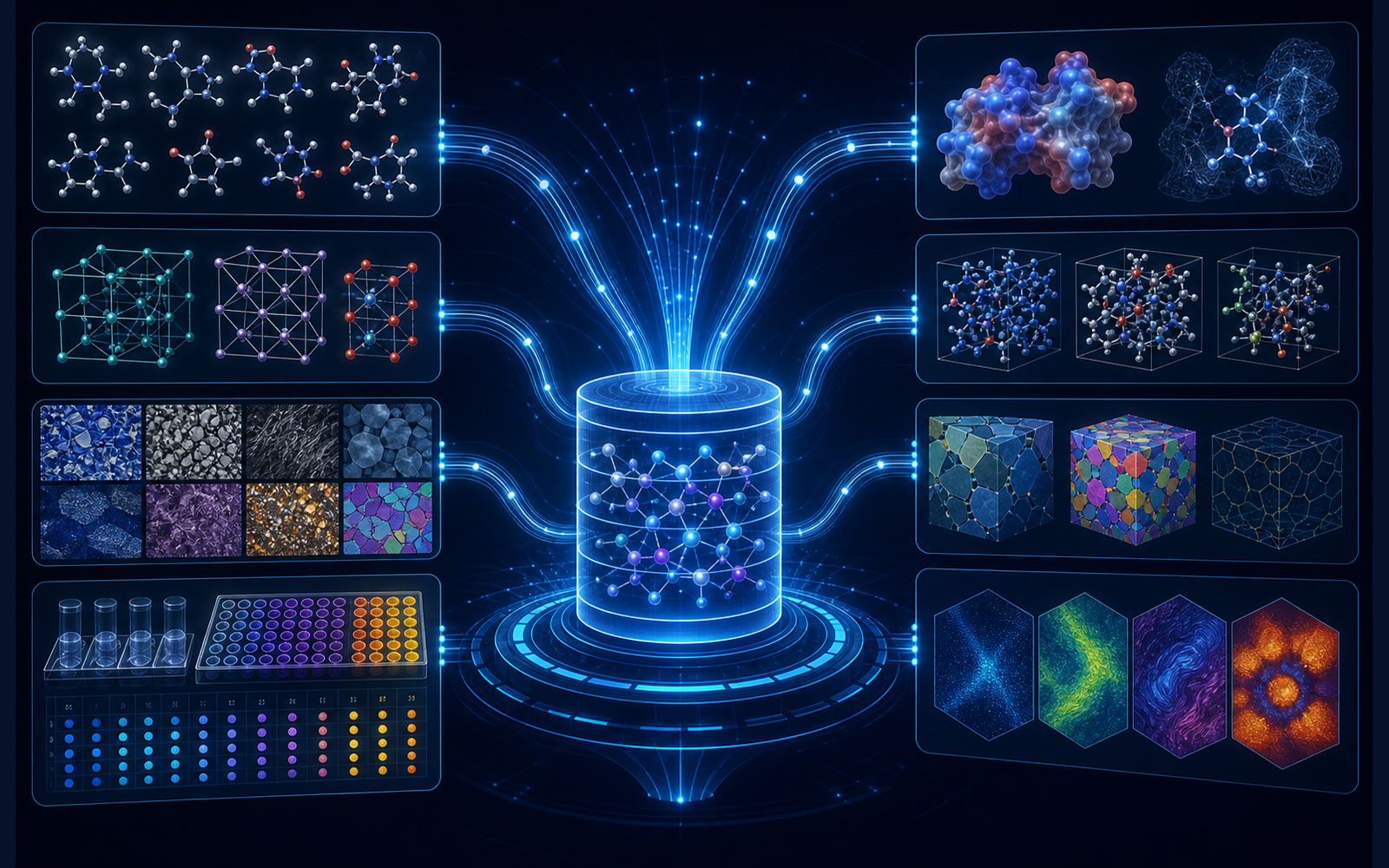
Multi-source data integrationDocumentation / Experiment / Database / Calculating
AI Drug & Materials
Intelligent Screening of Candidate Molecules and Materials
Combining literature, experiments and computational data to transform large candidate space into a verifiable priority list.

01
Solution Overview
Development of scenarios for drug molecules, catalytic materials, membrane materials, sorbents, formulation components, battery materials, etc., integrating literature, experimental records, databases and computation of simulation results, completion of data governance, feature engineering, modeling, candidate sequencing, multi-target optimization and validation iteratives, and assistance to research and development teams in fast-tracking high-potential programmes from among big candidates.
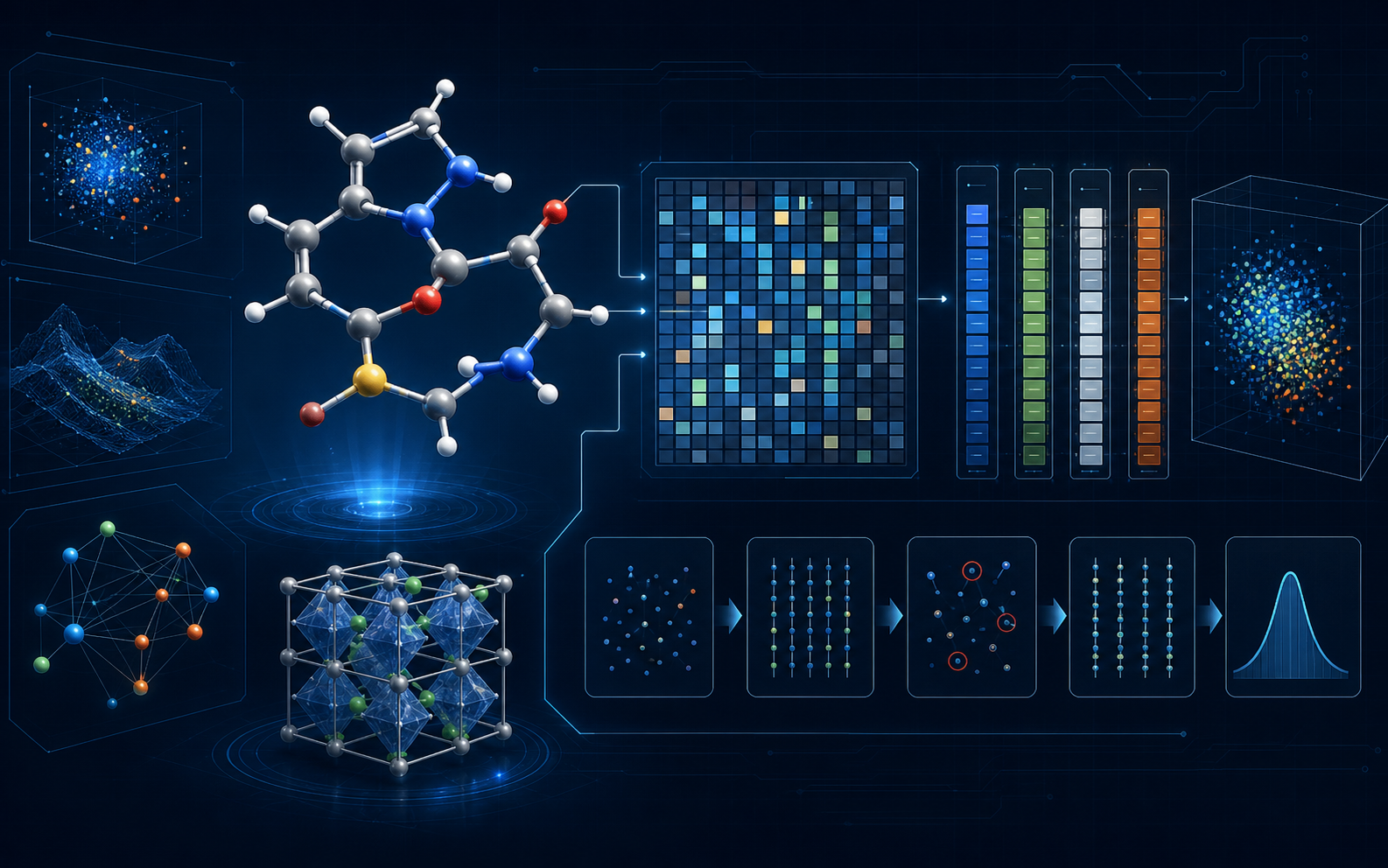
Feature ProjectDescriptor build, unit unification, mass label
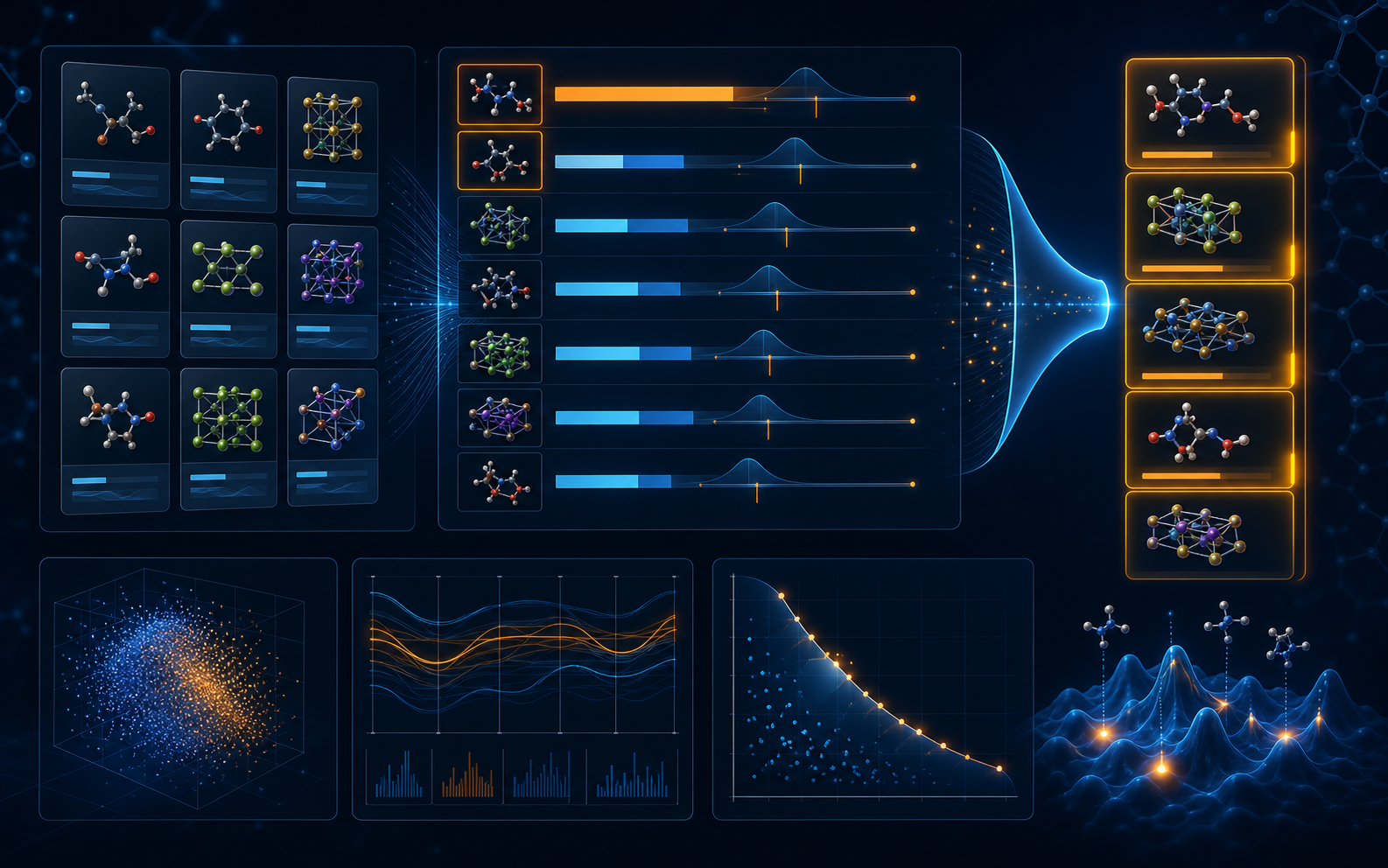
Smart SortingPerformance forecasting, confidence assessment, priority list
Closering ValidationExperimental or high-precision calculation feedback model update
02
Applications
- Drug molecules, formulations, catalysts or functional monomer screening
- Battery materials, membrane materials, adsorbents, MOF / COF
- Performance, stability, cost and availability balance under multiple indicator constraints
- Experimental data is scattered and needs to be reusable AI data asset
- Reducing blind error and prioritizing high-potential candidates

03
Overall process
Constraints and indicators
Compute Data
Build feature systems
Sort Recommendations
Parameter Optimization
Feedback update model
04
Technical modules
- Multi-source data integration:Harmonization of literature, experiments, databases and computational data and establishment of traceable data structure and quality labels.
- Knowledge base and literature mining:Extracting molecular/material entities, structural relationships, experimental conditions and performance indicators, and identifying potential design patterns.
- Machine learning predictions:Predict target performance based on molecular, material, process and environmental characteristics, and output model interpretation and uncertainty.
- Multi-purpose optimization:Indicators of integrated performance, stability, cost, toxicity, availability, etc., prioritized candidate list.
05
Project value
Improved filter efficiencyAutomation of large candidate space
Lower trial error costPrioritize high-potential objects
Shortening the R & D cycleData, models and candidate decisions completed in parallel
Support for continuous reuseSediment data, models and screening rules
 AI / Simulation
 Characterization / Supplies